


Magic Wall 3-in-1 for Museums: Interactive Wall for Children’s Learning and Play
June 2, 2026
June 6, 2026 at 07:13 PM
Magic Wall 3-in-1 by UTS turns an ordinary wall into an interactive museum exhibit where children can play, color, move, and bring their drawings to life.

Magic Wall 3-in-1 by UTS for Museums: How Interactive Walls Make Learning More Engaging
Children’s museums and science centers are no longer only about looking at exhibits. Young visitors want to touch, move, create, experiment, and see instant results. That is why interactive technologies are becoming an important part of modern museum spaces.
Magic Wall 3-in-1 by UTS turns an ordinary wall into an interactive play and learning area. It combines three different mechanics in one system: Ball vs. Wall, Paints and Brushes, and Living Drawings. For museums, this means one installation can be used for active games, creative workshops, educational programs, and family entertainment.
What Is Magic Wall 3-in-1?
Magic Wall is an interactive projection system where children interact with the wall using movement, soft balls, brushes, and drawings. The system reacts in real time with animation, sound effects, and bright visuals.
The product includes three main formats:
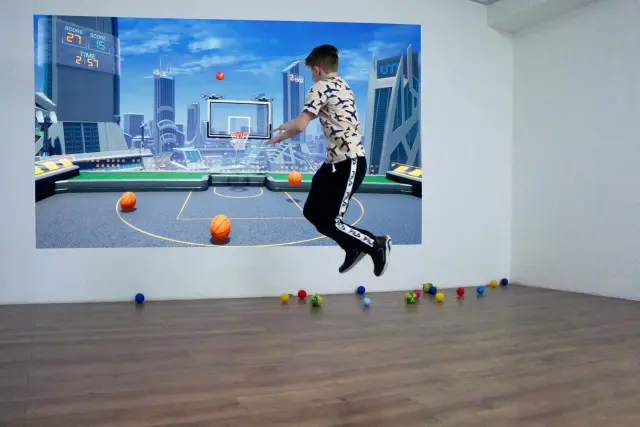
Ball vs. Wall — children throw soft balls at projected objects, targets, or game elements.
Paints and Brushes — children color projected images on the wall using special soft brushes.
Living Drawings — children color paper drawings, scan them, and see their artwork come to life on the interactive wall.
This makes Magic Wall suitable for different museum scenarios: active play zones, creative corners, guided workshops, and thematic educational exhibits.
Why Magic Wall Works for Museums
For children’s museums and science centers, an exhibit should be easy to understand, safe, memorable, and useful for learning. Magic Wall fits this format because children can start interacting with it almost immediately.
The wall helps museums create a more active visitor experience. Instead of simply watching or reading, children become part of the exhibit. They throw, draw, color, move, and see how the system responds to their actions.
Magic Wall also works well for groups. Several children can participate at the same time, which makes it suitable for school visits, family programs, birthday events, museum workshops, and weekend activities.
Ball vs. Wall: Active Learning Through Play
Ball vs. Wall is the most dynamic format. Children throw soft balls at the wall to hit targets, pop balloons, match pictures, feed characters, score points, or complete game tasks.
Museums can use this mechanic not only for entertainment, but also for educational activities. For example, children can match animals with habitats, choose correct objects, react to visual prompts, or complete team challenges.
This format helps develop reaction speed, coordination, attention, and spatial awareness. It is especially useful for younger visitors who learn better through movement and physical interaction.
Paints and Brushes: Creative Activities Without Mess
Paints and Brushes turns the wall into a digital coloring space. Children use soft brushes to color projected images, creating bright interactive pictures without paper waste, paint, or cleanup.
For museums, this is a practical format for creative workshops and calm activity zones. The content can be connected to different exhibition themes: oceans, forests, animals, space, dinosaurs, cities, or local culture.
This mode supports creativity, color recognition, imagination, and fine motor skills. It also gives children a quieter activity after more active games.
Living Drawings: Children’s Art Comes to Life
Living Drawings is one of the most engaging formats for museums. Children color contour pictures on paper, scan them, and then see their own drawings animated on the wall.
For example, a colored fish can appear in an underwater world, or a character can become part of a digital scene. This creates a strong emotional connection because the child’s own artwork becomes part of the museum experience.
Museums can use Living Drawings for educational workshops, storytelling sessions, ocean-themed exhibitions, art-and-science programs, and family events.
How Museums Can Use Magic Wall
Magic Wall can be used in several ways:
as a permanent interactive exhibit;
as a children’s activity zone;
as part of a science center or discovery room;
as a creative workshop tool;
as an attraction for school groups and family programs;
as a temporary exhibition feature.
The 3-in-1 format gives museums flexibility. One wall can support active games, creative learning, group participation, and themed educational content.
Conclusion
Magic Wall 3-in-1 by UTS helps museums create interactive experiences where children do not just observe — they participate.
They move, play, color, scan drawings, and see the results of their actions in real time. This makes the museum visit more dynamic, memorable, and educational.
For children’s museums and science centers, Magic Wall is a flexible solution that combines entertainment, creativity, and learning in one interactive wall system.