


How to Use Water Spring Mode in iSandBOX for Education
June 3, 2026
June 6, 2026 at 02:26 PM
Discover how Water Spring mode in iSandBOX by UTS helps children explore water flow, springs, floods, reservoirs, and landscapes through interactive hands-on learning.

How to Use Water Spring Mode in iSandBOX for Education
Teaching children how water moves through nature can be difficult with textbooks alone. Rivers, springs, reservoirs, floods, slopes, valleys, and terrain changes are dynamic processes. They are easier to understand when children can see them, touch them, and experiment with them in real time.
Water Spring mode in iSandBOX by UTS turns these concepts into an interactive learning experience. Children shape the sand with their hands and instantly see how water appears, flows, accumulates, spreads, and reacts to the landscape they create.
For schools, private educational centers, and kindergartens, this mode helps make geography, environmental science, and early STEM learning more visual, practical, and engaging.
What Is Water Spring Mode?
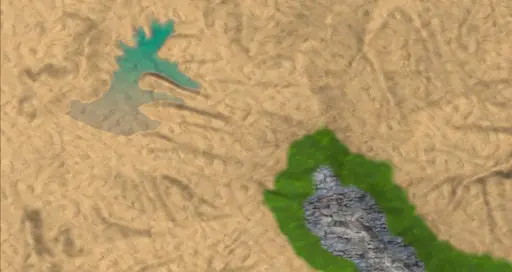
Water Spring mode allows children to explore the behavior of water in natural environments. By changing the sand landscape, they create mountains, valleys, slopes, reservoirs, and channels. The system then visualizes how water moves across the terrain.
Children can observe how:
water flows down slopes
springs appear in the landscape
water collects in low areas
reservoirs and lakes are formed
floods spread across flat surfaces
rivers and channels change direction
This makes abstract natural processes visible and easier to understand.
Instead of simply hearing that water flows from higher ground to lower ground, children can build a mountain, create a valley, and watch the water move through it. The result is a clear connection between physical action and scientific observation.
Why It Works for Schools and Kindergartens
Water Spring mode is especially useful for educational institutions because it combines play, experimentation, and learning. Children are not passive listeners. They actively build the environment and immediately see the consequences of their decisions.
For younger children, the mode develops basic understanding of nature, water, and cause-and-effect relationships. For school students, it can support more structured lessons in geography, natural science, ecology, and environmental studies.
The experience is intuitive: children do not need complex instructions to begin. They can move the sand, create shapes, and observe what happens. Teachers can then guide the process with questions, explanations, and small learning tasks.
For example:
“What happens if we make this mountain higher?”
“Where will the water go if we create a channel?”
“Why does water collect in this area?”
“How can we stop a flood?”
“What happens when we build a dam?”
These simple questions turn play into a meaningful educational activity.
Learning Through Experimentation
One of the strongest advantages of Water Spring mode is that children can test different scenarios safely and repeatedly. They can create a river, block it, change the terrain, build a reservoir, or simulate a flood. Every change produces a visible result.
This supports inquiry-based learning. Instead of receiving ready-made answers, children discover patterns through their own actions.
They learn that terrain affects water movement. They see that water does not spread randomly, but follows the shape of the landscape. They understand why low areas collect water, why slopes matter, and why natural barriers can redirect a stream.
This type of interactive learning is particularly valuable in early education because it develops observation, reasoning, and problem-solving skills.
Educational Topics Covered by Water Spring Mode
Water Spring mode can be used across several classroom topics.
In geography lessons, it helps explain terrain, elevation, slopes, rivers, lakes, valleys, and watersheds. Students can build landforms and see how water reacts to them.
In environmental science, it can support discussions about floods, water accumulation, soil, ecosystems, and the importance of natural water balance.
In STEM activities, the mode encourages children to test hypotheses, compare results, and understand basic physical principles through direct experimentation.
In kindergarten and preschool settings, it works as a sensory and developmental activity. Children develop fine motor skills, spatial thinking, coordination, and early curiosity about the natural world.
Example Classroom Activities
Teachers can use Water Spring mode as a short demonstration or as a full interactive lesson.
One activity is “Build a Mountain Spring.” Children create a mountain and observe where water appears and how it moves down the slope. The teacher can explain how springs and streams form in nature.
Another activity is “Create a River.” Students shape a channel in the sand and watch how water follows it. They can then change the riverbed and see how the flow changes.
A third activity is “Stop the Flood.” Children create a flat area and then test how water spreads. They can build barriers, raise the terrain, or create reservoirs to control the flow.
For older students, the teacher can introduce more complex tasks, such as comparing steep and gentle slopes, designing a dam, or explaining why some areas are more vulnerable to flooding.
Benefits for Educational Institutions
For schools and kindergartens, Water Spring mode offers several practical benefits.
It makes lessons more engaging and memorable. Children are more likely to understand and remember concepts when they interact with them physically.
It supports different learning styles. Visual learners see the process, kinesthetic learners shape the terrain, and curious students can experiment independently.
It helps teachers explain complex topics without relying only on diagrams or videos. The lesson becomes active and collaborative.
It also creates a strong “wow effect” in classrooms, STEM labs, private schools, educational centers, and kindergarten learning spaces. This can be useful not only for daily lessons, but also for open days, parent presentations, and extracurricular activities.
More Than a Game
Although Water Spring mode looks like a game, its educational value is much broader. It helps children understand how natural systems work by allowing them to interact with those systems directly.
Children learn that small changes in the landscape can affect the movement of water. They see how rivers form, how reservoirs appear, and how floods can spread. They begin to understand the relationship between land, water, and the environment.
This is exactly what makes iSandBOX effective for education: it turns complex processes into visible, hands-on experiences.
Conclusion
Water Spring mode in iSandBOX by UTS gives schools, kindergartens, and educational centers a practical way to teach children about water, terrain, and natural processes.
By shaping the sand and watching water react in real time, children explore geography and environmental science through active discovery. They do not just memorize concepts — they test them, observe them, and understand them through experience.
For modern education, this is a powerful format: interactive, visual, memorable, and easy to integrate into lessons.