


Dinosaurs Mode in iSandBOX for Schools and Kindergartens
August 5, 2026
August 16, 2026 at 10:45 AM
Discover how Dinosaurs mode in iSandBOX helps schools and kindergartens teach children about prehistoric life, fossils, extinction, and paleontology through interactive learning.

Dinosaurs Mode in iSandBOX for Schools and Kindergartens
Dinosaurs have a natural ability to capture children’s attention. They introduce young learners to questions about the distant past, extinct animals, changing environments, fossils, and the work of scientists who study prehistoric life.
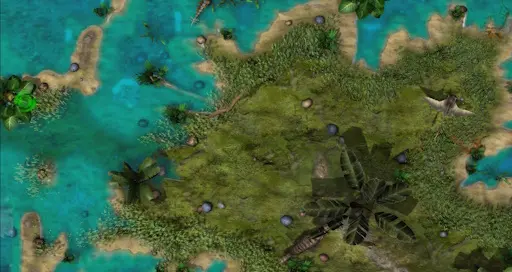
With Dinosaurs mode in iSandBOX, these topics become an interactive learning experience. Instead of only looking at illustrations or watching a video, children can explore a prehistoric environment directly in the sandbox, interact with dinosaurs, observe different events, and even uncover dinosaur skeletons hidden beneath the sand.
For schools, kindergartens, preschools, and educational centers, the mode provides a practical way to combine science learning, sensory play, storytelling, and exploration in one activity.
Turn a Lesson About Dinosaurs into an Interactive Experience
Traditional lessons about prehistoric animals usually rely on books, pictures, models, or videos. iSandBOX adds another dimension: children can actively participate in the learning process.
In Dinosaurs mode, the sandbox becomes a prehistoric landscape populated by dinosaurs. Children can interact with the environment and observe what happens when different events occur.
The mode can include experiences such as:
exploring a landscape inhabited by different dinosaurs;
observing prehistoric animals and discussing their appearance and behavior;
triggering environmental events such as a meteor shower or tornado;
digging through the sand to discover dinosaur skeletons;
learning through experimentation and immediate visual feedback.
This helps teachers transform an abstract topic into an activity children can see, touch, discuss, and remember.
Introducing Children to Prehistoric Life
Dinosaurs can become a starting point for broader lessons about the natural world.
Teachers can use the interactive sandbox to introduce concepts such as:
Different types of dinosaurs.
Children can compare prehistoric animals, notice differences in their appearance, and discuss characteristics such as size, body structure, movement, or diet.
Herbivores and carnivores.
The lesson can introduce basic food relationships and explain why different animals developed different physical characteristics.
Habitats and environments.
The projected landscape helps children understand that animals live within an environment rather than separately from it.
Extinction.
Events such as a meteor shower can provide an accessible starting point for explaining that species and environments change over very long periods of time.
For younger children, these concepts can remain simple and exploratory. For school-age learners, teachers can use the same activity as the basis for more detailed discussions about biology, geology, evolution, and Earth history.
Become a Young Paleontologist
One of the most educational elements of Dinosaurs mode is the opportunity to search for dinosaur skeletons.
Children can move the sand and uncover remains hidden beneath the surface, turning the sandbox into a simulated paleontological excavation.
The teacher can use this activity to explain what paleontologists do, how fossils are discovered, and why scientists study them.
A lesson might begin with questions such as:
What can scientists learn from a skeleton?
Why are dinosaur bones found underground?
How do we know what extinct animals looked like?
What is the difference between a paleontologist and an archaeologist?
This makes the activity useful not only for learning facts about dinosaurs but also for introducing children to scientific investigation.
Learning Through Cause and Effect
Interactive environments are particularly useful when children can immediately observe the consequences of their actions.
When an event is activated in Dinosaurs mode, learners can watch the environment change and discuss what happened.
Teachers can encourage children to predict the result before an event begins:
“What do you think will happen if the environment changes?”
“Which animals might be affected?”
“Can the landscape look different after a natural event?”
This simple prediction–observation–discussion sequence introduces an important principle of scientific thinking: forming an idea, observing what happens, and comparing the result with the original prediction.
Supporting Sensory and Motor Development
iSandBOX combines digital content with physical interaction.
Children still work with real sand: they dig, move, shape, flatten, and rebuild the landscape. The projection reacts to the surface while the physical material remains an important part of the experience.
For younger learners, these actions can support:
fine motor development;
hand–eye coordination;
sensory exploration;
spatial awareness;
concentration and attention.
The activity therefore combines digital learning with hands-on play instead of replacing physical interaction with a screen.
Encourage Communication and New Vocabulary
Dinosaurs mode can also support language development.
While children explore the sandbox, teachers can introduce vocabulary connected with prehistoric life and science, including words such as:
dinosaur, fossil, skeleton, extinct, predator, herbivore, carnivore, paleontologist, meteor, excavation, habitat.
For younger children, teachers can focus on descriptions:
“Which dinosaur is bigger?”
“What can you see?”
“Where is the skeleton?”
For older learners, the activity can become a discussion, presentation, or storytelling exercise.
Because several children can explore the sandbox together, the activity naturally creates opportunities for conversation and collaborative learning.
Use Dinosaurs Mode Across Different Subjects
Although Dinosaurs mode fits naturally into science lessons, teachers can use it across several areas of the curriculum.
Science
Explore dinosaurs, extinction, fossils, prehistoric ecosystems, natural events, and the history of the Earth.
Geography and Earth Science
Discuss landscapes, environmental change, different types of terrain, and how natural events can affect ecosystems.
Language Development
Ask children to describe dinosaurs, explain what they discovered, learn new vocabulary, or tell a story about the prehistoric world.
Art and Creativity
After exploring the sandbox, children can draw their favorite dinosaur, create a prehistoric landscape, or design their own imaginary species.
Group Projects
Learners can work together as a team of paleontologists, search for fossils, classify discoveries, and present their findings to the class.
The same interactive mode can therefore support several educational objectives without requiring children to switch between multiple learning environments.
Example Classroom Activity: Dinosaur Expedition
A teacher can organize a simple lesson around an imaginary scientific expedition.
Step 1: Enter the prehistoric world
Allow children to explore the interactive landscape and identify the dinosaurs they can see.
Step 2: Observe
Ask learners to describe the animals and the environment.
Step 3: Investigate
Children dig into the sand and search for dinosaur skeletons.
Step 4: Discuss
Talk about fossils, paleontologists, and what scientists can learn from prehistoric remains.
Step 5: Observe environmental events
Trigger an available natural event and ask children to describe how the environment changes.
Step 6: Reflect
At the end of the lesson, ask each child to share one new thing they learned about dinosaurs or prehistoric life.
A single activity can therefore combine physical exploration, scientific observation, communication, and collaborative learning.
Suitable for Both Guided Lessons and Free Exploration
Dinosaurs mode does not have to be used only during structured classes.
In kindergartens and preschools, educators can allow children to explore the prehistoric environment through open-ended play.
In primary schools, teachers can connect the activity with a specific science topic.
In museums, educational centers, libraries, and after-school programs, the same mode can be used as an engaging introduction to paleontology and natural history.
This flexibility allows educators to adapt the experience to different age groups, lesson formats, and learning objectives.
From Watching Dinosaurs to Exploring Their World
Children are often fascinated by dinosaurs long before they encounter them as a formal school topic. Dinosaurs mode in iSandBOX uses that interest as a gateway into science.
By combining a projected prehistoric world with real sand, interactive events, and fossil discovery, educators can move beyond passive learning and give children an opportunity to investigate the topic themselves.
For schools and kindergartens, it creates a learning environment where play becomes observation, exploration becomes investigation, and a familiar fascination with dinosaurs becomes an introduction to science.