


Interactive Sandbox at Buena Vista Museum
August 2, 2026
August 3, 2026 at 08:48 PM
Discover how Buena Vista Museum uses an augmented reality sandbox with 16 educational games to engage children through interactive learning and play.

Interactive Sandbox at Buena Vista Museum: Turning Museum Learning into an Adventure
Interactive exhibits help museums move beyond passive observation and give children an opportunity to explore, experiment, and learn through action. The opening of an augmented reality sandbox at Buena Vista Museum demonstrates how physical play and digital technology can be combined to create an educational experience that appeals to visitors of different ages.
The new exhibit transforms an ordinary sandbox into an interactive environment where children can shape the sand, change the projected landscape, complete game tasks, and even fight virtual dragons.
With 16 different game modes available, the sandbox gives the museum a flexible attraction that combines entertainment, education, and hands-on participation.
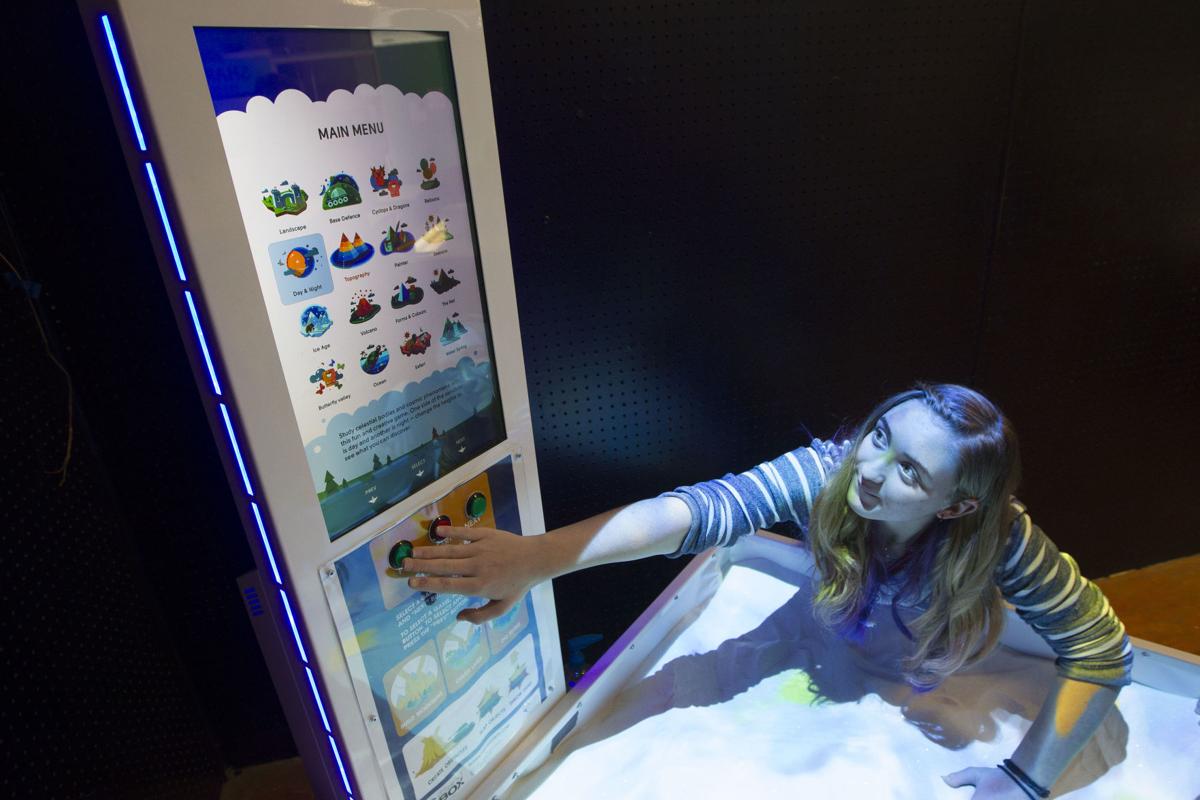
More Than a Traditional Sandbox
At first glance, the exhibit looks like a conventional sandbox. However, the system uses augmented reality technology to project animated images directly onto the sand.
As visitors move and reshape the sand, the projected environment responds to their actions. Mountains, valleys, water areas, fantasy landscapes, and interactive characters can appear and change in real time.
During the museum’s opening presentation, children tested several activities, including a fantasy game in which players fight dragons. This type of immediate visual response makes the experience intuitive: children can begin playing without lengthy instructions and quickly understand how their actions influence the digital environment.
The result is an exhibit that connects physical activity with digital content while keeping children actively involved.
Sixteen Games in One Interactive Exhibit
According to the museum’s executive director, the augmented reality sandbox includes 16 different games.
This variety is particularly valuable for museums and science centers. Instead of presenting one fixed activity, the same installation can offer different themes, tasks, and visitor experiences.
Children may explore landscapes, interact with animated objects, complete missions, or participate in fantasy adventures. Different game modes can appeal to different age groups, interests, and learning objectives.
For museum operators, multiple activities also help maintain visitor interest. Returning families can discover new games during each visit, while staff can select content that is suitable for a particular event, educational program, or group.
Learning Through Physical Interaction
The Buena Vista Museum case shows how educational technology can make museum learning more active.
Children do not simply watch an animation on a screen. They touch the sand, build shapes, change the terrain, observe the result, and adjust their actions. This creates a continuous connection between movement, experimentation, and visual feedback.
Depending on the selected game, an interactive sandbox can support the development of:
spatial thinking;
hand-eye coordination;
fine motor skills;
understanding of shapes and terrain;
problem-solving skills;
attention and concentration;
creativity and imagination;
communication and teamwork.
The sandbox can also introduce children to basic geographical and scientific concepts. By creating mountains, depressions, valleys, and water areas, visitors can observe how different forms of terrain relate to one another.
The learning process happens naturally through play rather than through a conventional lesson.
Educational Content Combined with Fantasy
One of the strengths of the exhibit is its ability to combine educational activities with entertainment.
Fantasy scenarios, such as fighting dragons, immediately capture children’s attention. Once they begin interacting with the installation, they also practice coordination, decision-making, observation, and cooperation.
This combination is important for children’s museums and science centers. Educational content does not always need to look like a classroom activity. A child may be learning while exploring a fantasy world, completing a game task, or working together with other visitors.
Interactive storytelling helps museums present information in a form that feels accessible and enjoyable.
An Exhibit for Children of Different Ages
The museum introduced the augmented reality sandbox as an activity for children of all ages.
Younger visitors can enjoy touching the sand, creating simple shapes, and watching the colorful projected effects. Older children can focus on game objectives, strategic tasks, and more complex interactions.
Several children can also use the sandbox at the same time. This makes the exhibit suitable for families, school groups, museum workshops, birthday programs, and organized educational visits.
Shared play encourages children to communicate, distribute tasks, and respond to one another’s actions.
For museums, this means one installation can support several visitor formats rather than serving only one narrow age category.
A Strong Attraction for a Museum Opening
Buena Vista Museum used the interactive sandbox as the central attraction during the opening of its new exhibit.
A local television report showed visitors testing the games and invited families to attend the public launch. The museum also offered free admission for visitors aged 18 and under during the opening day when accompanied by an adult with a paid ticket.
This launch strategy demonstrates how an interactive exhibit can support not only educational objectives but also museum marketing.
A visually engaging installation provides strong material for:
media coverage;
social media videos;
opening events;
family promotions;
school announcements;
community partnerships;
seasonal museum campaigns.
Children interacting with projected landscapes and animated characters create a clear and visually appealing story that can be easily communicated to families.
Encouraging Longer and More Active Visits
Interactive exhibits can influence how visitors move through a museum.
Traditional displays are often viewed briefly before families continue to the next section. A hands-on installation encourages children to remain in one area, try several activities, and repeat the experience.
The availability of 16 games gives visitors a reason to spend more time with the exhibit. Children can test different modes, compare activities, and return to the sandbox later during the same visit.
Longer engagement can improve the overall visitor experience and help museums create stronger memories around their educational programs.
A Flexible Solution for Museums and Science Centers
The Buena Vista Museum example illustrates how an augmented reality sandbox can serve several functions within one venue.
It can operate as:
a permanent interactive exhibit;
an educational tool for school visits;
an attraction for family days;
part of a geography or natural science program;
an activity for holiday events;
a collaborative game for groups;
a visually distinctive element for museum promotion.
Because the experience is based on software content, the attraction can offer different themes without requiring the museum to replace the physical installation.
This flexibility is particularly useful for venues that need to regularly refresh their programs while working within limited exhibition space.
Making Museum Education Memorable
Children often remember experiences in which they were personally involved.
Building a mountain, changing a landscape, completing a mission, or fighting a virtual dragon creates a stronger emotional connection than simply observing an exhibit from a distance.
The interactive sandbox at Buena Vista Museum demonstrates how museums can use augmented reality to turn visitors from observers into participants.
By combining real sand, responsive projections, multiple game modes, and educational content, the exhibit creates an environment where children can learn through movement, experimentation, imagination, and shared play.
For children’s museums, science centers, discovery spaces, and educational attractions, interactive sandboxes offer a practical way to make complex subjects more accessible while creating an experience families will want to explore and remember.
Interactive Sandbox Solutions for Museums
UTS develops interactive sandbox solutions that combine hands-on play with digital projection and responsive software content.
Different game modes allow museums and science centers to adapt the experience to their audiences, educational programs, exhibition themes, and event formats.
An interactive sandbox can become both an educational instrument and a central family attraction—helping museums create active, engaging, and memorable visitor experiences.