


How to Encourage Repeat Visits to Family Entertainment Centers with PlayMesh
October 12, 2026
October 12, 2026 at 08:24 AM
Give visitors a reason to return. Discover how PlayMesh connects player profiles, personal progress and leaderboards to turn individual game sessions into an ongoing experience.

How to Encourage Repeat Visits to Family Entertainment Centers with PlayMesh
Discover how player profiles, personal achievements and leaderboards can turn individual gaming sessions into an ongoing experience that encourages visitors to return.
Why One Great Visit Is Not Always Enough
For family entertainment centers, attracting visitors is only part of the challenge. The next step is giving them a reason to come back.
A child may enjoy an interactive game, complete a challenge and leave with a positive impression. But when the experience ends, there may be little motivation to return to the same attraction.
What if every game session became part of a longer journey? What if visitors could save their achievements, compete with other players and continue progressing each time they returned?
This is the idea behind PlayMesh by UTS Play — a connected gaming system that brings together player profiles, personal progress and leaderboards to make interactive entertainment more engaging over time.
For family entertainment center operators, this creates an opportunity to turn occasional players into returning visitors.
From a Single Game to an Ongoing Experience
Traditional arcade and interactive attractions often focus on the immediate experience. Players complete a game, see their results and move on.
PlayMesh adds continuity.
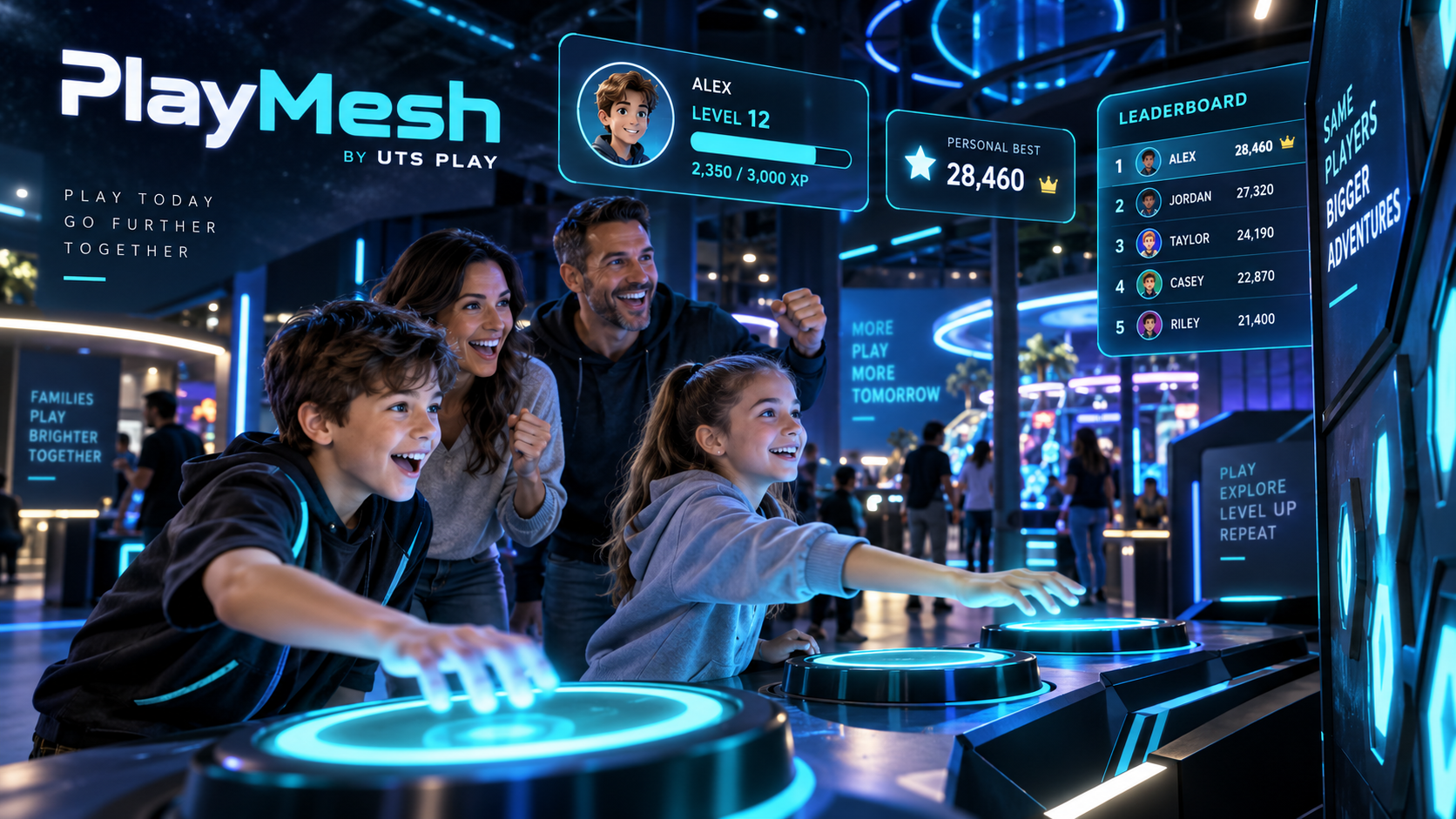
Each player can create a personal profile with a name and avatar. Their scores, achievements and progression become part of an ongoing gaming experience rather than disappearing when a session ends.
This introduces three motivations to play again:
Beat a personal best. A saved score gives players a specific target for their next attempt.
Climb the leaderboard. Comparing results with other players introduces friendly competition and a new reason to improve.
Reach the next level. Experience points, levels and titles create a sense of achievement that extends beyond a single visit.
Instead of simply remembering that they enjoyed a game, visitors can remember exactly what they want to achieve next.
For entertainment centers, this distinction matters. A clear personal goal can provide a stronger reason to return than the attraction alone.
How PlayMesh Works for Visitors
The PlayMesh experience is designed around a straightforward player journey.
Step 1: Create a player profile
Visitors create their own gaming identity using a name and avatar. The profile becomes a recognizable part of their experience across compatible games.
Step 2: Connect to an attraction
Players scan a QR code displayed in the game menu or directly on the game screen to connect their profiles using their phones.
In a typical multiplayer session, up to four players can connect, depending on the game and selected mode.
Step 3: Play under their own name
Once connected, players participate using their personal profiles. Compatible games maintain the connection as visitors move from the menu into gameplay.
Step 4: Save results and earn experience
After completing a session, the system records scores, updates personal bests and awards experience points (XP).
Step 5: Return with a new goal
Players can see their achievements and identify their next challenge, whether that means improving a score, moving up the rankings or reaching another level.
The result is a connected experience in which progress stays with the player between sessions.
Personal Progress Makes Every Visit Meaningful
One of the most important elements of PlayMesh is its progression system.
The platform includes 100 levels of progression, from Rookie to Legend, giving players long-term goals to work toward.
Experience points can be earned through participation, with additional recognition for improving personal results or achieving first place against other connected players.
This means that a session can contribute to a player's progress even when they do not finish at the top of the leaderboard.
For younger visitors, reaching another level can become an exciting achievement. For older children and teenagers, improving personal records and competing for higher rankings may provide additional motivation.
For family entertainment centers serving different age groups, these overlapping motivations can help make connected attractions appealing across multiple visits.
Leaderboards Bring Competition Beyond a Single Visit
Competition becomes more interesting when players can see how their achievements compare with others.
PlayMesh supports several leaderboard levels:
Local leaderboards: rankings for an individual attraction.
City leaderboards: results compared with players in the same city.
Overall leaderboards: shared rankings across connected venues.
Leaderboards are organized by game and mode, helping ensure that scores remain comparable.
Consider a visitor who finishes a game in fifth place. Rather than treating the session as complete, they can leave with a specific objective: return and reach the top three.
Another player may discover that their score places them among the leading participants in their city, creating a new incentive to improve.
Entertainment center operators can also build promotional activities around these competitive elements.
For example, a venue could organize a weekend high-score challenge or encourage visitors to compete for the top position on a particular attraction.
These are possible promotional applications of the leaderboard functionality, rather than separate tournament-management features.
One Player Profile Across Different Games
Family entertainment centers often offer several interactive attractions. However, each game can feel like a separate experience.
PlayMesh helps connect compatible games through a shared player identity.
Visitors can use their familiar name and avatar across different supported games while maintaining individual scores and records for each game and mode.
For example, a player might set a personal record in Neon Breach and later participate in a multiplayer session of Neon Dominion. Their achievements remain associated with the same player profile.
This creates a broader sense of progression across the entertainment experience.
Instead of focusing exclusively on one attraction, visitors can explore different compatible games while continuing to develop their personal gaming identity.
For operators, this provides another way to encourage engagement with the available attractions.
What PlayMesh Means for Family Entertainment Center Operators
The commercial value of PlayMesh lies in connecting visitor engagement with opportunities for repeat play.
1. More Reasons for Repeat Visits
When visitors have saved achievements, personal records and levels to pursue, they have a specific reason to return.
A future visit becomes an opportunity to continue something they have already started.
This can support retention by keeping the attraction relevant beyond the initial experience.
2. More Opportunities for Additional Game Sessions
A player who wants to improve their score may choose to play again.
The motivation is built into the gaming experience: each attempt offers an opportunity to improve a personal best, earn experience or move higher in the rankings.
For attractions that generate revenue through individual or additional gaming sessions, this can create opportunities for incremental sales.
3. Greater Engagement Across Connected Attractions
A shared profile gives visitors continuity when moving between compatible games.
This can encourage players to explore more of the available gaming experiences instead of limiting themselves to a single attraction.
4. Opportunities for Promotional Activities
Leaderboards and personal achievements can become useful elements in a venue's marketing communications.
Operators can highlight competitive challenges, encourage visitors to improve their rankings or introduce recurring high-score activities.
Such initiatives can give visitors new reasons to engage with the entertainment center between visits.
How to Evaluate the Impact on Your Venue
For entertainment center operators, engagement should ultimately translate into measurable business results.
The PlayMesh presentation recommends comparing performance before and after connecting an attraction, focusing on three indicators:
Returning-player share: Are more players coming back for another experience?
Sessions per player: Are visitors participating in more gaming sessions?
Attraction revenue: Is increased engagement associated with additional revenue?
Tracking these indicators helps operators assess whether persistent player progress and competitive features are contributing to their commercial objectives.
Results will depend on factors such as visitor demographics, game selection, pricing and how the venue promotes the experience.
Give Visitors a Reason to Come Back
A memorable interactive game can attract attention. But a game that remembers its players can offer something more: continuity, personal achievement and a reason to return.
With PlayMesh, every connected session contributes to a player's journey. Scores remain available, achievements accumulate and new challenges await.
For family entertainment centers, this creates an opportunity to move beyond one-time entertainment and develop experiences that encourage ongoing participation.
Turn every game into the beginning of the next visit.
Discover how PlayMesh by UTS Play can add player progression, leaderboards and connected gaming experiences to your entertainment center.