


How Rutland County Museum Uses UTS iSandBOX for Interactive Learning
August 17, 2026
August 30, 2026 at 03:56 PM
Discover how Rutland County Museum uses UTS iSandBOX as part of its immersive exhibition to engage children with geology, fossils, dinosaurs, and interactive learning.

How Rutland County Museum Uses UTS iSandBOX to Bring History and Science to Life
Museums increasingly face the same challenge: how to make history, archaeology, geology, and natural science engaging for a generation of visitors accustomed to interactive digital experiences.
Rutland County Museum in Oakham, UK, provides an example of how immersive technology can complement a traditional museum collection rather than replace it.
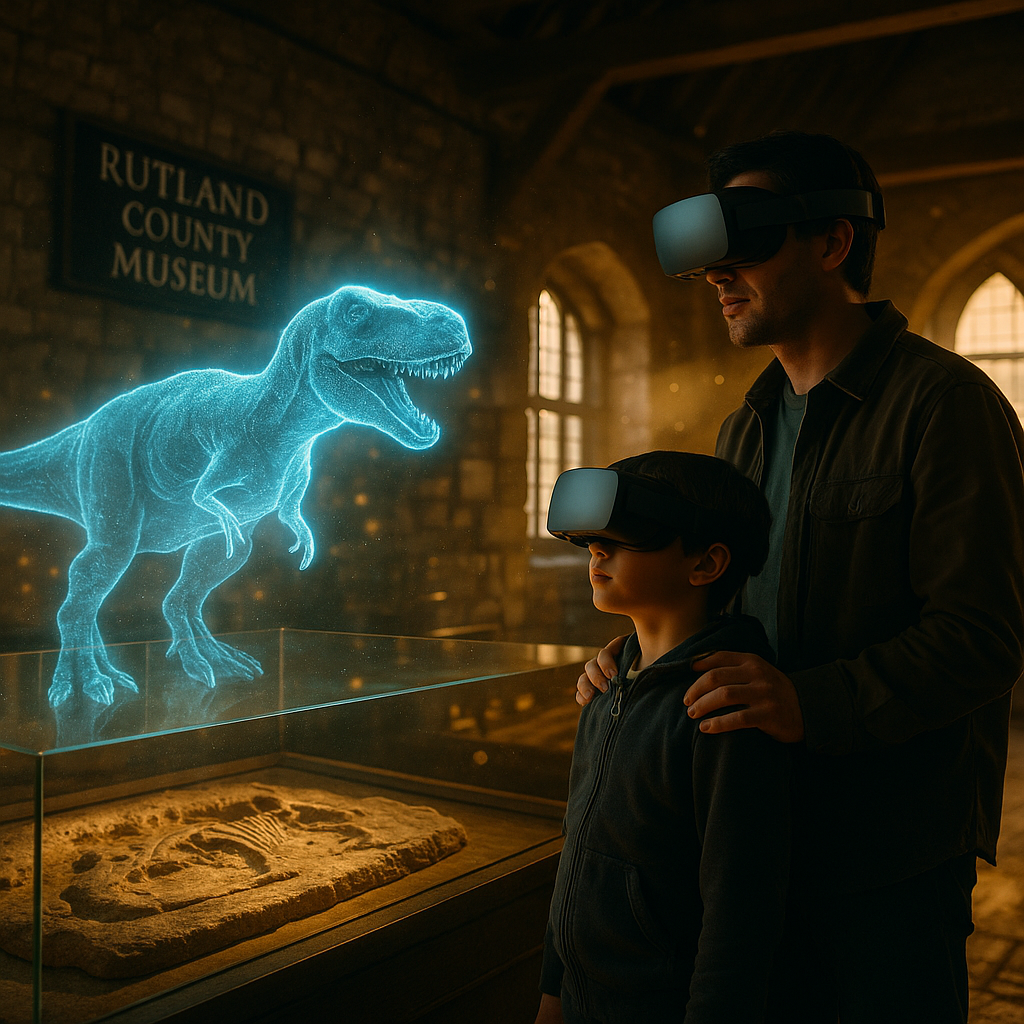
As part of a new digital exhibition launched in 2025, the museum introduced several interactive experiences, including virtual reality, digital interpretation and an augmented reality sandbox. UTS iSandBOX became one of the experiences designed specifically to engage younger visitors through hands-on exploration.
The result is a museum environment where visitors do not simply observe the past — they can interact with it.
From Traditional Exhibition to Interactive Discovery
Rutland County Museum tells the story of Rutland, England’s smallest county, through collections covering archaeology, rural life, local history and other aspects of the region’s heritage.
In 2025, the museum expanded this experience with a new digital exhibition combining several technologies.
The project included a virtual reality journey into the Jurassic seas, an interactive fossil-dig experience, a 3D interpretation of the Ketton Roman Mosaic, and an augmented reality iSandBOX for younger visitors. The exhibition was designed to connect regional history and scientific discoveries with more immersive forms of storytelling.
For museums and science centers, this combination is significant. Digital technology is not presented as a separate attraction disconnected from the collection. Instead, it helps visitors explore the same subjects — prehistoric life, fossils, archaeology and landscapes — through different forms of interaction.
UTS iSandBOX as Part of the Museum Experience
At Rutland County Museum, UTS iSandBOX adds a physical, tactile element to the digital exhibition.
Children can reshape real sand while augmented reality responds to the changing surface. Depending on the interactive scenario, visitors can create landscapes, observe water, produce volcanic eruptions, search for fossils and explore environments associated with prehistoric life.
Rutland County Council describes the installation as offering more than 20 interactive experiences, ranging from creating and erupting volcanoes to discovering virtual dinosaur bones and identifying species. The museum itself currently promotes the installation as an experience where visitors can “shape landscapes, watch water flow, and bring miniature worlds to life.”
This makes the installation particularly relevant to museums working with subjects such as:
geology and geography;
dinosaurs and paleontology;
archaeology;
natural history;
ecosystems and landscapes;
environmental science.
Instead of explaining these subjects exclusively through text panels, objects or video, museums can give children an environment in which they experiment with them directly.
Learning Through Physical Interaction
One of the distinctive advantages of an interactive sandbox in a museum setting is the connection between physical action and digital feedback.
A child moves the sand, changes the terrain and immediately sees the projected environment respond.
This transforms the exhibit from something to look at into something to investigate.
For younger museum visitors in particular, this approach can make abstract concepts easier to understand. Elevation becomes something children can build. Water flow becomes something they can observe. A volcanic landscape can be created rather than simply shown in an illustration. Fossils can become objects of discovery rather than images in a display case.
At Rutland County Museum, the sandbox was specifically introduced as an experience for younger visitors, helping families engage with geology and paleontology through touch-responsive play.
Connecting Digital Experiences with Real Museum Collections
The Rutland case is also useful because the technology is connected to the museum’s actual subject matter.
Rutland has an important connection with paleontology through the discovery of the Rutland Sea Dragon, a remarkably complete ichthyosaur fossil. The museum’s new digital exhibition uses this local story as the basis for immersive experiences related to the Jurassic period.
This illustrates an important principle for interactive museum design: technology is most effective when it supports the museum’s narrative rather than functioning simply as entertainment.
An interactive sandbox can therefore become part of a wider educational journey.
Visitors might first encounter fossils or information about prehistoric environments in the collection, then use iSandBOX to explore landscapes, excavation or geological processes themselves.
The physical exhibit provides the historical or scientific context; the interactive installation gives visitors an opportunity to experiment with that context.
A Digital Exhibition That Helped Attract More Visitors
The wider digital transformation at Rutland County Museum also produced a notable visitor result.
According to The VR Collective, visitor numbers during August 2025 were almost 100% higher than in comparable previous periods following the launch of the new immersive exhibition. The publication highlights families as an important audience for the new experiences.
It would be incorrect to attribute this growth to iSandBOX alone: the exhibition combined VR, AR and other digital experiences.
However, the result demonstrates something highly relevant to museums considering interactive technology. Experiences designed around participation can form part of a broader strategy to make a museum more attractive to families and younger audiences.
Rutland County Council has continued in this direction. In 2026, it announced further plans to transform the museum into a modern cultural destination, with new galleries and additional immersive digital interpretation included in the redevelopment.
Why Interactive Sandboxes Work in Museums and Science Centers
For children’s museums, science centers and natural history museums, installations such as UTS iSandBOX can address several objectives at the same time.
They create an immediate visual attraction, encourage children to participate physically and allow multiple scientific or educational themes to be presented using a single installation.
Unlike a conventional digital screen, the interaction is based on real material. Children sculpt, dig, build and experiment with sand while the digital layer expands what that physical environment can represent.
The same space can therefore become a volcanic landscape, a paleontological excavation site, a geographical model or another interactive environment depending on the selected scenario.
For museums, this provides an opportunity to extend an exhibition without filling the space with multiple single-purpose installations.
Technology as a Tool for Museum Storytelling
The Rutland County Museum case shows how museums can combine traditional collections with interactive technology without losing their educational purpose.
The artifacts and historical stories remain central. Technology gives visitors additional ways to understand them.
For children, that can mean moving from observation to experimentation: uncovering fossils, changing a landscape, triggering natural processes and discovering what happens as a result.
For museums and science centers, it creates another point of entry into subjects that might otherwise seem complex or distant.
UTS iSandBOX demonstrates how one interactive installation can become part of a broader museum learning environment — connecting physical play, digital visualization and scientific discovery.
And the experience at Rutland County Museum illustrates the wider opportunity: when immersive technology is integrated around meaningful educational content, it can help museums engage younger audiences, create more memorable family visits and give visitors a new way to interact with the stories behind their collections.